Showing posts with label remodeling. Show all posts

Tuesday, September 20, 2016

Universal Design - Creating a Home for a Lifetime


It's not an easy subject to cover. No one ever wants to think about their parents, themselves, or future generations not being physically able to safely enter a bathtub or walk up a few porch steps. With Universal Design, however, that thought process is taken care of for you - with more items you may not have even thought about.

So, what is Universal Design? And who does it benefit? 


Universal Design is a way of strategizing a plan, or modifying a home, to maximize accessibility for any person that may have physical restrictions in the future. This means elderly individuals, as well as someone who may be short-term, physically injured.

Bathrooms are specifically targeted, as they are the primary source of injuries in the home for any age, with over an astonishing 80% of injuries. Listed below are some alterations to make during the design phase that could ensure your home could really be suitable for a lifetime.


SAFETY FEATURES


BATHROOMS:

  • Walk-in bathtub options
  • Sloped and recessed (no ledge or step) oversized showers
  • Additional hardware "grab bars" in showers and commode rooms

THROUGHOUT:

  • Additional lighting, especially in transitions between rooms and differing floor heights
  • Sloped or ramped porch entry in lieu of steps
  • Non-slick flooring on interior as well as sidewalks and patios

CONVENIENCE & COMFORT FEATURES 


BATHROOMS:

  • Handheld shower head & built-in shower seat
  • Comfort height commodes


THROUGHOUT:

  • Open concept living
  • 3'0 wide or larger doors, entries, and exterior walkways
  • Lowered countertops, outlets, and switches
  • Zoned HVAC, multiple thermostats
  • Lever hardware instead of round knobs


Here is an example of an open concept plan with comfort and safety features of Universal Design, designed by Kurk Homes. We originally created this plan with the idea of building a secondary structure on a property so that aging or physically challenged loved ones could have the security of being close by, but still maintain independent living. 


Chris McGinley, Kurk Homes President, was the chair of the 50+ housing council for Greater Houston Builders Association, focusing on universal design and "aging in place." He is also pictured above, with our grandparents and the co-founder of Kurk Homes, Mr. Chester Kurk, honored in our July post.


© Melanie McGinley Sparks and Kurk Homes, 2016. Unauthorized use and/or duplication of this material without express and written permission from this site’s author and/or owner is strictly prohibited. Excerpts and links may be used, provided that full and clear credit is given to Melanie McGinley Sparks and Kurk Homes with appropriate and specific direction to the original content.

Tuesday, June 21, 2016

Interior Design - 7 Ways to Custom Design A Farmhouse Kitchen

The "farmhouse" look has become a favorite of many, especially as it has recently been made even more visible in current interior design/ remodeling shows. Farmhouse style first exclusively was the architecturals, the outside of the house, and originated simply by location. A home on a ranch or a farm, despite what it looked like, was called a farmhouse.

Now, the term has taken on a much different design element - as both exterior and interior has been further defined. As the kitchen is deemed the heart of the home, creating a farmhouse kitchen adds warmth and functionality with crisp colors and fun antique accents.


7 Ways to Custom Design Your Own Farmhouse Kitchen:


1. Open Concept 

The status quo for house layouts, as the farmhouse style alludes to family and functionality.  The place to gather, to eat together, pray together, and admire your grandmother's cooking and your spouse attempting to emulate grandmother's cooking! If you can, create the space that is open from the kitchen to the breakfast/dining areas and the living/family room.


Dropping the formals are optional. You can still have a farmhouse kitchen with a formal dining, whether or not that is close to the kitchen depends on if you can use the room for another purpose, and if you have the space to use it. Our customer base varies between formals and non. Typically, young or growing families want to have a more informal, breakfast area approach, or create a large Great Room from the kitchen through the dining to the family.


2. Raise that ceiling! Vaulted ceilings have so much visual interest, if you have the space to lift it, a 14' or higher vault will make the room feel huge. A pop up or tray ceiling in a 9' or 10' plate allows you another foot without the additional expense of raising the full plate of the room. Even more flavor can be added to the vault or tray by installing faux beams in various patterns. Interior wood is great to add a cozy feel to any space - cedar wrapped faux beams have almost a meatier grain, while pine wrapped would be for a crisper look.


3. Square Off. Trim and interior millwork is typically square in a farmhouse kitchen; this is probably the biggest difference between French Country and Farmhouse interiors, square trumps round in farmhouse style. Rectangular subway tile in glossy white or grey is a common selection for kitchens, and can be detailed such as a houndstooth pattern above the cooktop for added interest. 

Beadboard details on the back of islands, cabinet door styles or full pantry doors - or even as a wainscot wall - can be indicative of the farmhouse style. Rectangular baseboard, a plain 1x6 is perfect and inexpensive, double crown moulding and cased windows are wonderful trim details in a bright glossy or semi gloss white to add contrast to the wall color. Speaking of...


4. Be Cool with Color! Cool neutral walls* are "so hot right now" (in my best Zoolander voice) in greys, light blues, and the ever so popular MINT. I went with a Sherwin Williams Functional Grey with Extra White trim for my farmhouse kitchen. I'm not going to lie, I was so excited to see a fresh palette of color after years and years of builder beige. Add pops of color with a small accent wall or fun pottery/paintings/decor in bright greens, yellows, and blues.

*There is a transitional wall color if shades of grey instill fear. I actually convinced my husband to paint our powder bath this color, called Greige. Greige was the IT color as the "I may be scared of grey, but I'm sick of beige" neutral that could cross the temperature barrier as either warm or cool.


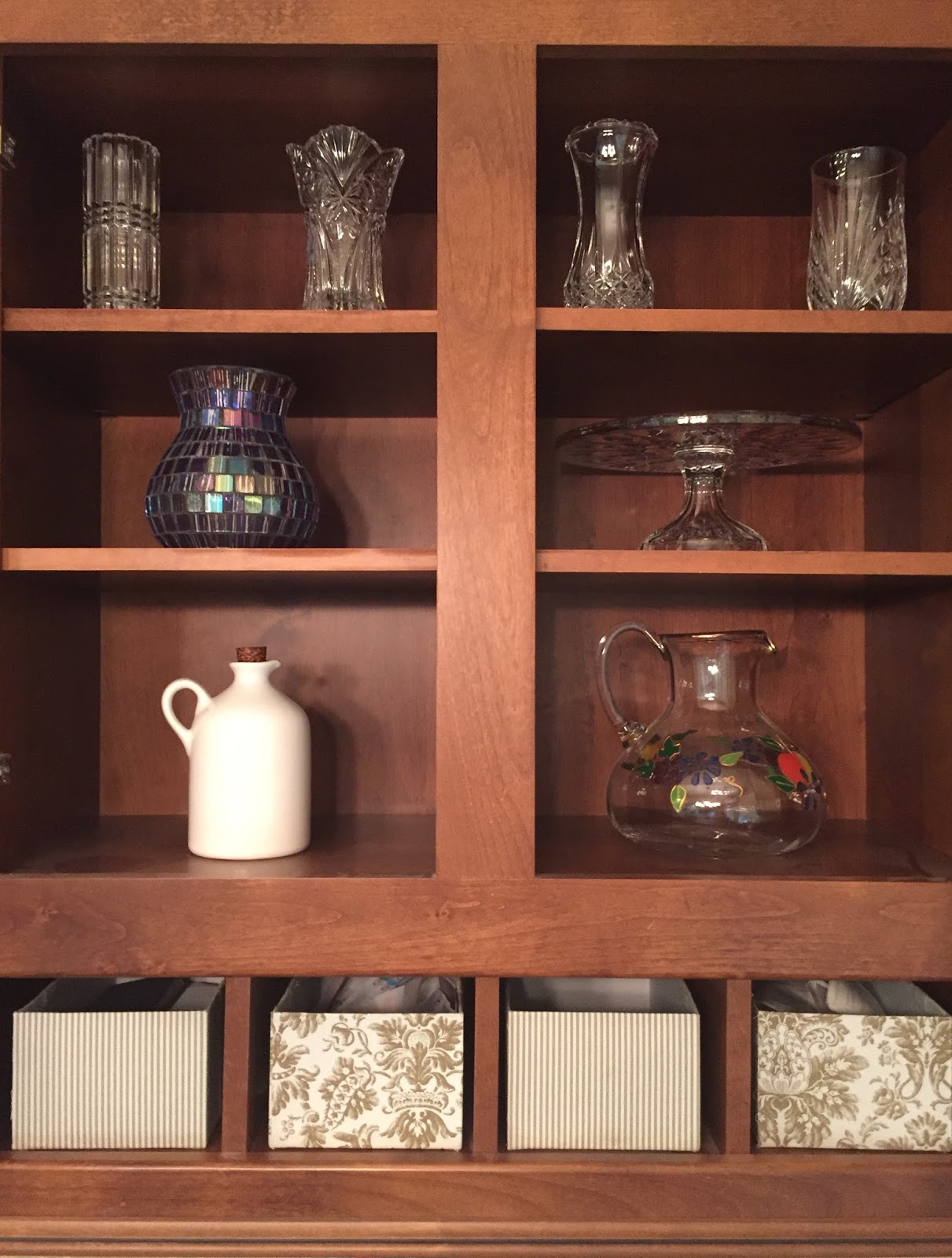
5. Expose the Shelves. Cabinetry in a farmhouse kitchen includes open shelving which can be functional or decorative, depending on the amount of storage. Colorful pottery or all white dishes and pitchers would both be great options for filling the shelves. 

Hanging coffee mugs on wall racks is both convenient and adorable, glass doors and chicken wire has also made an appearance in exposing shelves in either the pantry or the main kitchen cabinetry.


6. Antique the Sink! And Plumbing! Apron sinks, which is defined by the front portion of the sink extending slightly further than the cabinetry, like an apron, add a great dimension to the farmhouse kitchen. The sinks can be in either stainless steel or white porcelain, and are frequently one large bowl but can also be split, or partitioned, depending on personal preference. 

The vintage look on the faucet can be achieved by selecting a bridge style of faucet in chrome or stainless with cross or lever handles and a sprayer. Moen has some great vintage fixtures:


7.  Let there be Edison light. A vintage touch to lighting can be easily added using plain hanging pendants, but installing an Edison lightbulb in lieu of a regular fluorescent bulb. 
The distinguishable glowing filaments add old-time character. Selecting out of the ordinary lighting fixtures with mason jars, chicken wire, wagon wheels and rope are some more fun ideas to add quirky farmhouse fixtures above the island or sink without breaking the bank.


© Melanie McGinley (Sparks) and Kurk Homes, 2016. Unauthorized use and/or duplication of this material without express and written permission from this site’s author and/or owner is strictly prohibited. Excerpts and links may be used, provided that full and clear credit is given to Melanie McGinley (Sparks) and Kurk Homes with appropriate and specific direction to the original content.

Wednesday, March 9, 2016

Demo VS Remodel - What is better for you?

Location Location Location!
The first rule of real estate is a doozie. If you love your home, and can't imagine getting old(er) in another one, you may want to visit the idea of remodeling or demo'ing. Channeling my inner nerd to give you an unbiased assessment in the form of a pro con list:

------------------------------------------

REMODELING YOUR HOME:

Pros:

- Lazy factor. You don't have to move ALL your stuff. Just most of it in strategic areas.

- Ease of change. Your home is still your home, just with some improvements. It is refreshing, or should be!

- Pocketbook friendly. In general, remodeling specific rooms of a home is less expensive than building an entirely new one.

- Fewer days. Time is saved by not starting anew. You'll probably still need to acquire permits from a building official if it is a significant alteration, possibly community/municipality approval as well.

Cons:

- Open up a can of worms! If your house was built before the internet, you may be opening up the walls to rotted insulation, corroded wires, that dirty word "mold"... remodeling is not for the faint of heart. What started off as a simple make-the-onebutt-kitchen-into-twoandahalfbutts may turn into a complete re-wiring, re-insulating, and de-humidifying chore. This would make the cost jump dramatically, these priorly unforeseen issues can wreak havoc on your savings.*

- You live in a construction zone. Depending on the scope of the project, bathrooms or kitchens are inaccessible, entire rooms or floors are open to the elements, and a roof replacement could open you up to Miss Unpredictable: mother nature.

- No kids/pets allowed. Four-legged and two-legged children need to be elsewhere during a remodel. Too many things to step in - or eat.

- And you may want to make sure all of the "unmentionables" are put away. You'll have a construction crew there that will be all over your home, and your days of the week underwear from your Mom are probably best left in your drawer.

* This is actually be a pro in the long run. If you have mold or shoddy wiring in your home, the sooner you find out about it the better. It's just an expensive discovery that you need to prepare yourselves for if you are in an older home.


Your new remodeling housemates! Photo Credit: Kurk Homes
DEMOLITION OF EXISTING HOUSE & BUILDING A NEW HOME: 

Pros:

- Still your favorite location! School drop off, work commute, that shady bar that you love.. still at the same distance. No relearning "scenic" shortcuts!

- New home, starting fresh. When you demo the older home, you take with it all of the issues within the structure as well as the flow. Now you can make that open floor plan without having to add a million lam beams. Seriously, lam beams are more expensive than you would think!

- With new IRC codes and energy efficiency standards, new homes will be more efficient. So you'll save on those monthly energy bills - unless of course, you were living off the grid beforehand.

Cons:

- Permits can be a bit process to obtain. City permits may take upwards of 6 weeks. You'll need approval from all the governing jurisdictions for utility shut-off and transfer, temporary to permanent power, moving water and wastewater lines, etc. Some cities also require you to use only their approved contractors, which may or may not be better than your builder's approved contractors. This can be a headache and a delay - but many contractors help you obtain the necessary permits. Chances are, they've done this a time or two and know the process.

- Time. Design time, demo time, build time, and two moves. Demo'ing and building a new home takes a significant amount of calendar days. Do you have the time and the place to move for the 6 months (in a perfect world) to 18 months or longer if the weather misbehaves?

- Cost. Another significant investment is in your bank account. Can you afford to demo the old house and build fresh? A remodeling job can range from less than $20,000 to over $200,000 but a demo/rebuild is going to start around that $150,000 and increase from there depending on square footage and amenities.

Going, going, gone! Demo in the City of Houston. Photo Credit: Kurk Homes
------------------------------------------

SO WHAT NOW? 

Get assistance from builders and contractors to evaluate your options within your budget. You should be able to decide whether you want to demo or remodel first, that will keep your list of contractors to vet down since some builders don't remodel and vice versa.

Talk to your trusted contractors and get an inspection to uncover some of the mysteries behind the walls.

Check out your governing jurisdictions for permits - think of your deed restrictions, current survey of your home and property, utility easements, driveway easements, architectural control committees, etc. Everyone just might have an opinion, and an approval process to follow.

That at least will give you a headstart in the process!
SaveSave